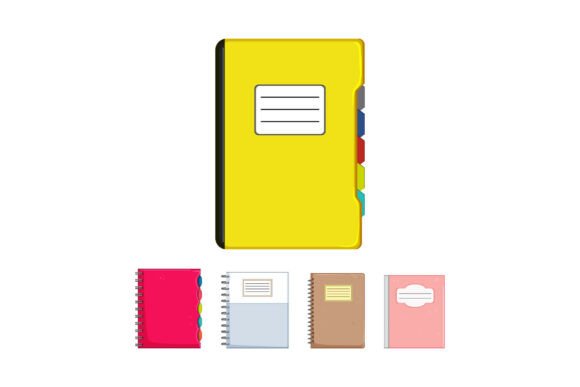
School and Office Supplies Concept with Digital Integration
In the modern landscape of productivity, the boundary between physical tools and digital efficiency is becoming increasingly blurred. The School and Office Supplies Concept with a focus on hybrid organization represents a significant shift in how we approach learning, planning, and business management. It is no longer sufficient to simply possess a stack of colorful notebooks or a set of binders; today's professionals and students require a seamless ecosystem where tangible resources meet digital workspaces. This concept illustrates various tools for learning, planning, and taking notes, creating a unified environment that enhances cognitive flow and organizational clarity.
The Evolution of Organizational Tools
Traditionally, school and office supplies were distinct categories. Students relied on textbooks, spiral-bound notebooks, and highlighters, while office workers depended on filing cabinets, manila folders, and heavy-duty binders. However, the School and Office Supplies Concept with an integrated digital layer has revolutionized this dichotomy. We now see a collection of colorful notebooks and binders designed not just to hold paper, but to serve as physical anchors for digital information.
This evolution addresses a common pain point: information silos. When notes are taken in a notebook and never digitized, they become inaccessible from other devices. Conversely, when everything is purely digital, the tactile satisfaction and memory retention benefits of handwriting are lost. The modern concept bridges this gap, offering a solution where a physical binder might contain QR codes linking to cloud storage, or where a notebook's layout mirrors a digital dashboard. This approach ensures that whether you are in a classroom, a boardroom, or a remote coffee shop, your tools remain consistent and effective.
Core Features of the Hybrid Workspace
What defines a successful implementation of the School and Office Supplies Concept with digital integration? Several key features stand out as essential for both education and business environments:
- Visual Coding Systems: Just as a collection of colorful notebooks helps categorize subjects visually, digital folders should mirror these colors. A red binder for "Urgent Projects" should correspond to a red-tagged folder in your project management software. This visual consistency reduces cognitive load.
- Modular Organization: Binders and notebooks are no longer static. They are modular systems where dividers can be swapped, and pages can be reorganized. In a digital workspace illustration, this translates to drag-and-drop interfaces that allow users to restructure their data as easily as moving a sheet of paper.
- Cross-Platform Accessibility: The ultimate goal is accessibility. Notes taken in a physical journal should be instantly available on a tablet or laptop. This requires tools that support scanning, OCR (Optical Character Recognition), and instant syncing.
- Ergonomic Design: Whether it is the weight of a binder or the font size on a screen, the physical comfort of the user is paramount. The concept emphasizes tools that reduce strain during long study sessions or workdays.
Practical Applications in Education and Business
The versatility of the School and Office Supplies Concept with makes it applicable across a wide spectrum of users. For students, the transition from high school to university often involves managing complex schedules and vast amounts of reading material. A well-structured system using colorful notebooks for different subjects, paired with a digital calendar for deadlines, creates a safety net against missed assignments. Imagine a student who uses a specific color-coded planner to track essay drafts, which are then scanned into a cloud drive for backup and peer review. This workflow exemplifies the practical value of integrating physical and digital tools.
In the corporate world, the stakes are often higher regarding data security and collaboration. Professionals benefit from the School and Office Supplies Concept with by maintaining a "second brain." A manager might keep a leather-bound notebook for brainstorming sessions during meetings, appreciating the freedom of unstructured thought. Immediately after the meeting, these scribbles are photographed and uploaded to a shared team workspace. This ensures that ideas are captured in the moment without the friction of typing on a laptop, yet they remain accessible to the entire team for follow-up actions.
- Project Planning: Use large-format binders for physical blueprints or prototypes, linked to digital Gantt charts for timeline tracking.
- Meeting Minutes: Take handwritten notes for better engagement, then transcribe key action items into a digital task manager.
- Client Management: Maintain physical portfolios for client presentations while storing contact details and history in a CRM system.
- Personal Development: Track habits and goals in a dedicated journal, reviewing progress weekly via a synced app.
Who Benefits Most from This Approach?
While almost anyone can improve their organization with these tools, certain groups derive exceptional value. Creative professionals, such as graphic designers and writers, often struggle with the rigidity of pure digital workflows. The tactile nature of sketchbooks and the ability to physically arrange sticky notes provide a spark of inspiration that screens sometimes stifle. By combining these physical aids with digital archiving, creatives maintain their artistic flow while ensuring their work is preserved and shareable.
Business owners and entrepreneurs also find immense utility here. The ability to quickly reference physical contracts stored in a binder while simultaneously checking digital financial records allows for rapid decision-making. Furthermore, online learners and remote workers, who lack the structure of a traditional office or campus, rely heavily on these concepts to create a sense of routine and order in their home environments. A dedicated desk setup featuring organized binders and a clean digital desktop can significantly boost morale and productivity.
Evaluating Suitability and Limitations
Despite its advantages, the School and Office Supplies Concept with digital integration is not without its challenges. One primary consideration is the initial time investment required to set up the system. Creating a cohesive link between physical and digital assets takes effort. Users must decide on a naming convention, a color-coding scheme, and a file structure that works for them before they can reap the benefits. Without this foundational step, the system can quickly become chaotic, leading to more disorganization than before.
Another limitation is cost. High-quality notebooks, durable binders, and robust digital subscriptions can add up. While there are budget-friendly options, achieving a truly seamless experience often requires investing in premium tools that offer durability and advanced features. Additionally, reliance on technology introduces potential points of failure. If a scanner breaks or internet connectivity is lost, the bridge between the physical and digital worlds is severed. Therefore, users must always have a contingency plan, such as keeping critical physical copies of important documents.
When evaluating suitability for different needs, consider the complexity of your workflow. If your tasks are linear and simple, a basic notebook might suffice. However, if you manage multiple projects, collaborate with teams, or handle sensitive data, the integrated approach becomes necessary. Ask yourself: Do I need to access my notes from multiple locations? Do I frequently search for past information? If the answer is yes, the School and Office Supplies Concept with digital tools is likely the right path.
Real-World Scenarios and Success Stories
Consider the case of a small marketing agency that struggled with version control. They adopted a system where all initial campaign ideas were sketched in a shared whiteboard notebook. Once a concept was approved, it was photographed and tagged in their digital asset management system. This reduced confusion and ensured that the creative team and the client were always looking at the same latest iteration. Similarly, a university student preparing for medical boards used a color-coded binder system for each organ system, with each page containing a QR code linking to video lectures and practice quizzes. This method improved her retention rates and allowed her to study effectively anywhere.
These examples illustrate that the power of the School and Office Supplies Concept with lies not in the individual tools, but in the synergy between them. By treating physical supplies and digital platforms as complementary parts of a whole, users can unlock a level of organization and creativity that neither could achieve alone.
Conclusion: Building Your Ideal Workspace
The journey toward a more organized and efficient life does not require abandoning tradition for technology, nor does it mean clinging to outdated methods. Instead, it invites us to embrace the School and Office Supplies Concept with a forward-thinking perspective. By curating a collection of colorful notebooks and binders that work in harmony with our digital workspaces, we create an environment that supports our unique cognitive styles and professional demands.
Whether you are a student navigating a semester of exams, a business owner scaling a startup, or a creator seeking inspiration, the principles of this concept offer a roadmap to success. Start small by identifying one area of disorganization and applying a hybrid solution. Over time, expand your system to encompass all aspects of your work and study. Remember, the best tool is the one that fits your workflow perfectly, allowing you to focus less on organizing and more on achieving your goals. As we continue to evolve in a digital age, the marriage of tactile supplies and virtual efficiency will remain a cornerstone of productive living.